
In Montford, Not All "Historic" Homes Play by the Same Rules
September 17, 2026
September 17, 2026
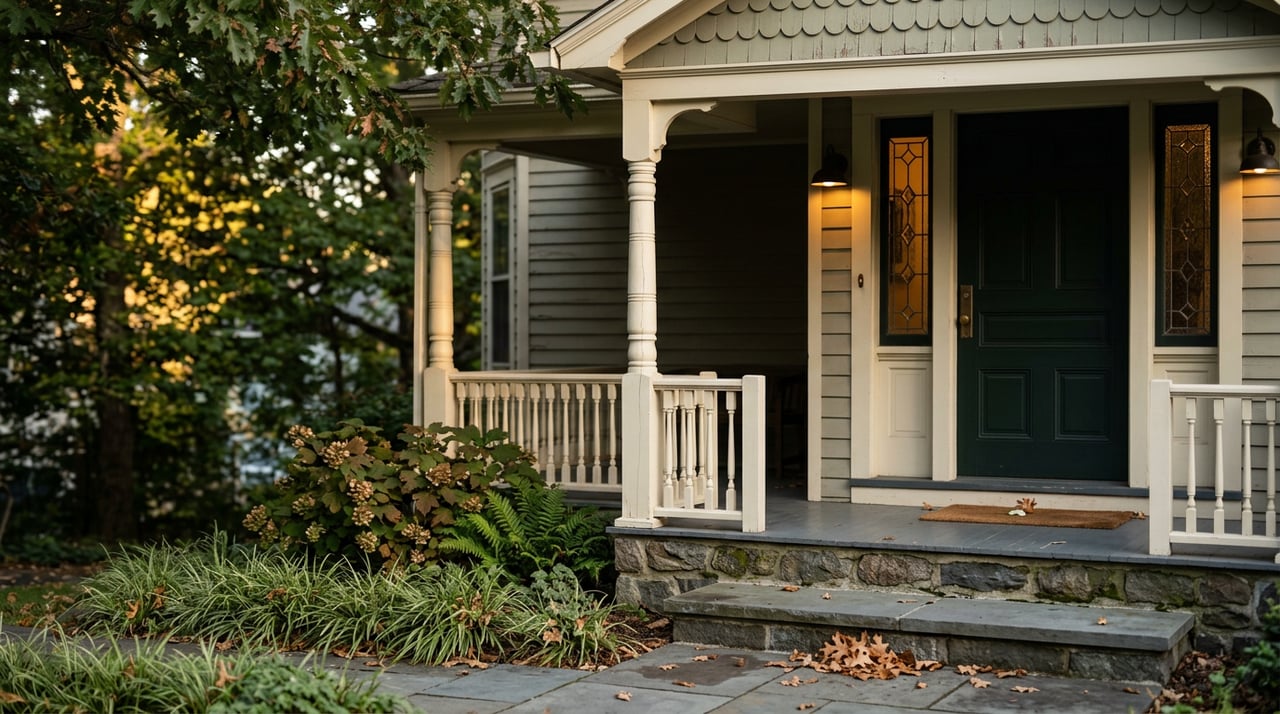
A buyer found the house on a Tuesday: a 1908 foursquare on a side street off Montford Avenue, original heart pine floors, a porch deep enough for two rocking chairs. The listing said "National Register Historic District." The buyer, reasonably, assumed that meant paperwork and patience before any exterior change. What the listing didn't say was whether the house also sat inside Montford's Local Historic District, the overlay that actually requires city sign-off before you touch the roofline, the windows, or the porch itself.
That distinction, more than square footage or price per foot, is the thing that catches Montford buyers off guard. Two designations share the word "historic." Only one of them controls what you're allowed to do to the house you're about to own.
Montford carries both a National Register of Historic Places listing and a Local Historic District designation, and the two do almost opposite things. The National Register portion of the neighborhood covers more than 600 structures built mostly between 1890 and 1920, in styles running from Victorian and Queen Anne to Colonial Revival and Neo-Classical. Being "contributing" to that listing is largely an honor and a door to state and federal historic rehabilitation tax credits. It does not, on its own, require anyone to review your exterior paint, your windows, or your new addition.
The Local Historic District is a different animal. Asheville City Council designated Montford as one of the city's Local Historic Districts in 1981, and that designation functions as a zoning overlay. Structures inside it are subject to design review by the Asheville-Buncombe Historic Resources Commission, the same body that oversees Chestnut Hill, Kimberly Avenue, and Albemarle Park. A property can be inside both, inside just one, or technically inside neither, and the listing agent's copy rarely spells out which.
| National Register (Montford) | Local Historic District (Montford) | |
|---|---|---|
| Established | Reflects buildings mostly built 1890 to 1920 | Designated by Asheville City Council in 1981 |
| Exterior design review required | No, unless also in the Local Historic District | Yes, before permits for exterior alteration, addition, or new construction |
| Enforcement mechanism | None for design; eligibility for tax credits | Certificate of Appropriateness issued by the Historic Resources Commission |
| What it changes for a buyer | Nothing procedural | Governs what you can build, remove, or replace outside |
If you are evaluating a Montford property with renovation plans, the question to ask before writing an offer isn't "is this house historic." It's "which kind, and does it require a Certificate of Appropriateness before I can touch the exterior."
Inside the Local Historic District, no building permit for construction, alteration, moving, or demolition can be issued before the Historic Resources Commission issues a Certificate of Appropriateness, commonly shortened to a COA. That requirement applies whether or not a separate building permit would otherwise be needed, and it covers additions, new construction, and exterior alterations, including accessory dwelling units.
The process has two tracks. Minor work gets reviewed and processed by city planning staff directly. Anything larger, or any application involving demolition, goes to the full Historic Resources Commission, which meets on the second Wednesday of each month. Once approved, the COA is a design approval only. It doesn't substitute for a separate building or zoning permit, so a buyer planning a renovation is often stacking two review timelines, not one.
Demolition sits under its own set of rules. The commission cannot simply deny most demolition requests outright, but under North Carolina's preservation statute it can delay one for up to 365 days, giving preservation advocates a year to find an alternative before a house can come down. For a buyer weighing a teardown-and-rebuild on a Montford lot, that delay is the real cost of the decision, not a formality.
Montford's design guidelines run to roughly 110 pages, and read cover to cover they sound exhaustive: siding, roof pitch, window proportions, chimney caps, even the invasive species list for the surrounding landscape. A buyer skimming that document for the first time could reasonably conclude that every exterior decision, down to shutter hardware, needs sign-off.
In practice, the city draws a narrower line. Alex Cole, an urban planner with the city who has spoken publicly about how the ordinance works, has explained that the guidelines cover everything from shutters to chimney caps, but that the city doesn't actually enforce paint colors, shutters, or other cosmetic changes. The review authority is real. It's aimed at structural and massing changes, not at the color you choose for your front door.
That gap between what's written and what's enforced is exactly where a buyer's assumptions tend to go wrong in both directions. Some walk away from a Montford house convinced they'll need a hearing to repaint a porch rail. Others assume the whole guideline document is theoretical and are surprised when an addition or a new garage triggers a real review timeline measured in weeks, not days.
The paperwork is one layer of friction. The house itself is the other, and in Montford it shows up predictably in an inspection report.
Homes built before 1940, which describes a large share of Montford's housing stock, were plumbed with galvanized steel supply lines and cast iron drains as a matter of course. Local plumbing contractors who work across Montford, Grove Park, and Kenilworth cite this as close to universal in that era of construction, and it isn't cosmetic. Galvanized pipe corrodes from the inside out over decades, which shows up as low water pressure, discolored water, or repeat pinhole leaks long before a pipe actually fails.
The decision a buyer faces isn't simply repipe or don't. A full whole-home repipe in Asheville, accounting for home size, pipe material, and how accessible the walls and crawl space are, typically runs from around $1,400 for a partial section replacement up to $14,500 or more for a full rebuild, and the work itself usually takes two to five days once a permit is pulled. Many of these houses are also candidates for a partial repipe, replacing just the supply lines while leaving the cast iron drains in place, which changes both the cost and the disruption compared to a full tear-out.
None of this is a reason to avoid a Montford house. It's a reason to read the inspection report as a negotiating document rather than a pass or fail grade, and to get a plumber's actual scope and quote before deciding what a repair credit or a price adjustment should look like.
The friction described above has always existed in Montford. What's changed is how much room a buyer now has to act on it.
Buncombe County's housing market moved further toward buyers through the second quarter of 2026, with average days on market reaching its highest second-quarter level since 2015 and inventory rising across nearly every price range compared to the previous four years. Inside the city of Asheville specifically, home sales actually rose slightly in the first quarter of 2026 compared to the same period the year before, even as prices eased modestly, with the city's median sale price moving from $506,000 to $493,000 over that stretch.
That combination matters here specifically. A buyer's market with rising inventory means less pressure to waive an inspection contingency to win a bidding war, and more room to actually walk through what a Certificate of Appropriateness would require before closing, and what a plumber's scope would cost before making an offer contingent on repairs. A year or two ago, in a market moving faster, that kind of diligence often got compressed or skipped. Right now it doesn't have to be.
Does every house in Montford need a Certificate of Appropriateness for exterior work? Only if the property sits inside the Local Historic District overlay, not simply because it's listed on the National Register. Ask the listing agent or check with the city's planning department directly, since the two designations overlap but aren't identical.
Can I repaint the house whatever color I want? In practice, yes. The city has stated it doesn't enforce paint color or other cosmetic exterior changes, even though the written guidelines address them.
What happens if work starts without a COA? Any building permit issued without the required Certificate of Appropriateness is invalid under the city's ordinance, which means work done that way can be flagged during a future sale or refinance, not just during the renovation itself.
How do I know if a house has been repiped already? An inspector or plumber can typically identify galvanized supply lines by sight, since the pipe is gray, threaded, and magnetic. If that's what's still in the walls, budget for the conversation about timing and cost rather than treating it as a surprise later.
A Montford purchase rewards the buyer who asks about the overlay before the offer, not after the inspection. If you're weighing a specific property here and want a straight read on which designation applies and what the inspection is likely to turn up, Mills + Coin can walk the file with you before you're under contract. Schedule a private consultation and showroom visit to talk through the specifics.
Stay up to date on the latest real estate trends.

At Mills Coin & Co. Real Estate Group, we’re your trusted partner in navigating the Asheville real estate market. Whether you're buying, selling, or investing in property in Asheville, we're here to make the process smooth, seamless, and successful for you.

40 BILTMORE AVE ASHEVILLE, NC 28801