A Century Later, Biltmore Forest Is Rebuilding the Same Way It Began
August 20, 2026
August 20, 2026
On February 17 this year, a small crowd gathered inside Biltmore Forest Town Hall to watch a black walnut mantel get installed over the building's fireplace. The wood came from a tree that had grown on the old Biltmore Estate land, the same ground the town itself was carved from a century ago. Hurricane Helene took the tree down in September 2024. A woodworker named Kwadwo Som-Pimpong spent months turning it into something permanent, milling it at Sundried Lumber in Woodfin and letting it cure through six weeks of solar kilning before it ever touched a chisel.
It is easy to read that mantel as a nice civic gesture, a way to make something good out of storm debris. It is actually a repeat of the exact sequence that founded this town.
Biltmore Forest exists because of a flood, not a real estate plan. In 1916, floodwaters tore through Biltmore Village and the Biltmore Estate, damaging the property badly enough that George Vanderbilt's trustees commissioned a survey from Junius Adams on how to reduce the estate's carrying costs. His recommendation was blunt: sell off roughly 1,500 acres along Hendersonville Road that had become unproductive and heavily taxed. Edith Vanderbilt and her daughter Cornelia agreed, and in partnership with Adams, Thomas Wadley Raoul, Burnham S. Colburn, and William A. Knight, they formed the Biltmore Estate Company to develop the land as a restricted residential park. The town was officially chartered in 1923, with rules baked in from day one: no subdividing lots for 21 years, three to five acres per lot, and a minimum house cost between $7,500 and $25,000.
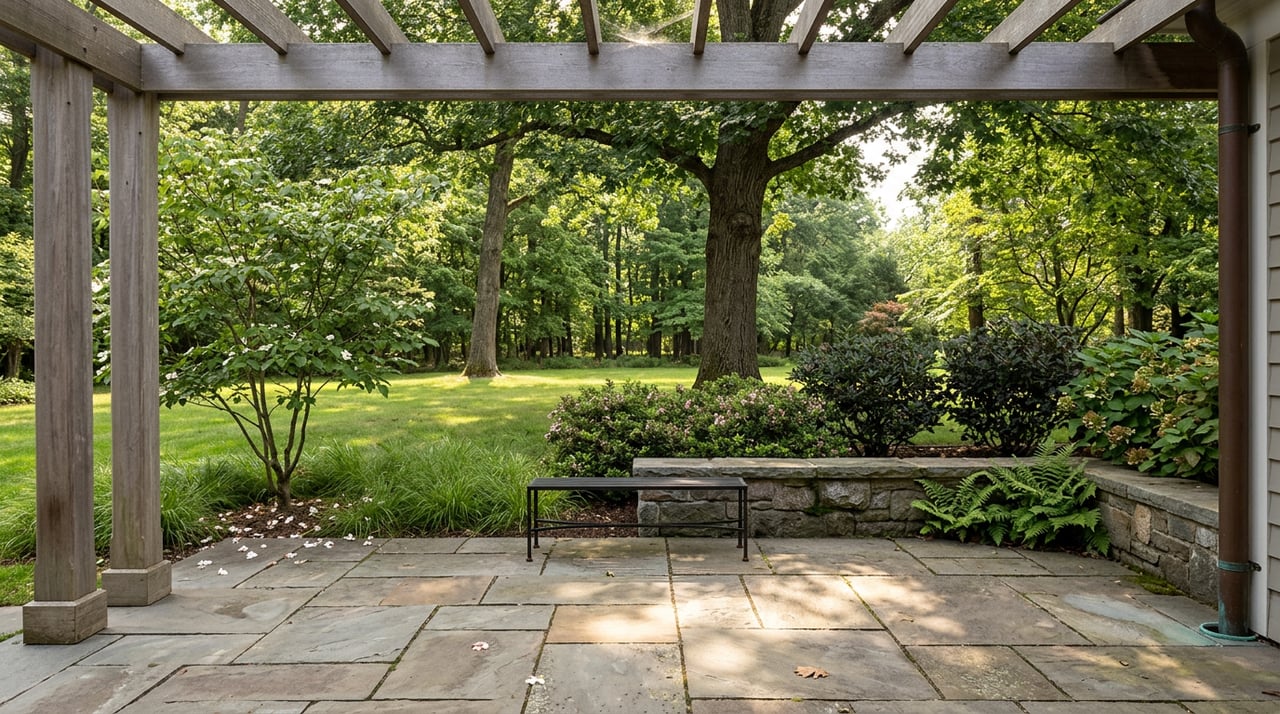
The town marked its hundredth year as an incorporated municipality in 2023, with an anniversary art show, a centennial logo stamped on commemorative wine labels, and a trolley tour where the History Committee narrated the founding story block by block. A year after that celebration wrapped, Helene arrived and did to the tree canopy roughly what the 1916 flood had done to the land itself. The storm did not touch the town's charter or its lot restrictions. It touched the thing that actually makes Biltmore Forest feel like Biltmore Forest: the trees.
Regional forestry assessments after the storm put canopy loss across the greater Asheville area at somewhere near 40 percent, according to Asheville Greenworks' community forestry team. That is not a Biltmore Forest specific figure, since no town-level canopy survey has been published, but it gives a sense of scale for a storm that dropped or damaged trees across roughly 821,906 acres of North Carolina forestland.
The species breakdown matters more than the raw percentage. Arborists surveying fallen trees across the region after Helene found that red oaks, white oaks, and hickories came down at higher rates than maples, black gums, and tulip trees. Biltmore Forest's oldest streets were planted up in the years right after the 1923 charter, when oak was the default shade tree for a project like this one. If you have a century-old oak on your own lot, that history explains why it was more exposed than a younger maple down the street. It means the forest growing back over the next few decades will likely lean more heavily on the species that proved more wind tolerant, not simply replace what fell tree for tree.
That is precisely the subject the town's Tree Committee brought in outside expertise to address. Dr. Dave Ellum spoke to residents in February on post disturbance forest regeneration, walking through how Southern Appalachian forests naturally recover after a disturbance and why native species selection matters to that process. A separate session in July featured Phyllis Stiles continuing the same thread. Neither talk was framed as disaster recovery theater. Both treated the canopy as something that has to be actively managed back into existence, not something that simply regrows on its own timeline.
The town's response has been consistent enough over the past two years to read as a program rather than a series of one-off gestures:
The Friends of Biltmore Forest committee sits behind most of this work, a resident-run group whose stated mission is beautifying public and private spaces through citizen outreach and education on native landscapes. It was a Friends of Biltmore Forest connection that brought the mantel project to the town's stewardship committee in the first place. As one town commissioner put it when he first heard the proposal, the Friends of the Forest needed to hear it.
None of this shows up as an abstraction if you actually live on one of these streets. The recovery is visible in the same places residents already gather.
The Biltmore Forest Running Club, led by resident Blair Holl, meets regularly for casual runs through the neighborhood and welcomes newcomers at any skill level. The Kiwanis Club's annual 5K and 10K brought runners through town again this July, a fixture on the summer calendar for years now. Earlier this month, the Friends of Biltmore Forest hosted a picnic at Rosebank Park, one of three public green spaces in town alongside Greenwood Park and Brooklawn Park. Tree-lined streets like Arborvale Road remain the preferred route for the walkers and cyclists who use them daily, canopy overhead intact in most stretches even where individual trees came down.
A block or two from most of this sits the Biltmore Forest Country Club, whose Donald Ross designed golf course opened in 1922, a year before the town itself was chartered. The clubhouse and 135 acres of grounds have outlasted a Great Depression, a world war, and now a Category 4 hurricane. It is worth remembering, walking past it, that almost everything structural in this neighborhood, the charter, the club, the lot restrictions, the tree canopy that gives the streets their character, dates back to the same handful of years just after a different storm remade this same ground.
The mantel at Town Hall is a small object, a few feet of finished walnut over a fireplace most residents will only see a handful of times a year. But it makes a point that's easy to miss walking your dog past a stump where an oak used to stand. Biltmore Forest was never a fixed thing handed down whole from 1923. It was built out of a recovery, and it is being rebuilt out of one again, tree by tree, talk by talk, with the same resident committees doing the work their predecessors did a century ago.
If you already call Biltmore Forest home, the practical version of that story is simpler: watch for the next Reforest the Forest talk, take the free saplings when the Tree Committee offers them, and expect the streets under your feet to look a little different in twenty years than they did before Helene. That has always been how this place has worked.
For anyone thinking about what a neighborhood with this kind of institutional memory and civic follow-through means for property values, design continuity, or timing a future move here, Mills + Coin has spent years tracking how Asheville's premium neighborhoods actually behave, not just how they're listed. Schedule a private consultation and showroom visit to talk through what a place like Biltmore Forest looks like from the inside.
Stay up to date on the latest real estate trends.

At Mills Coin & Co. Real Estate Group, we’re your trusted partner in navigating the Asheville real estate market. Whether you're buying, selling, or investing in property in Asheville, we're here to make the process smooth, seamless, and successful for you.
40 BILTMORE AVE ASHEVILLE, NC 28801