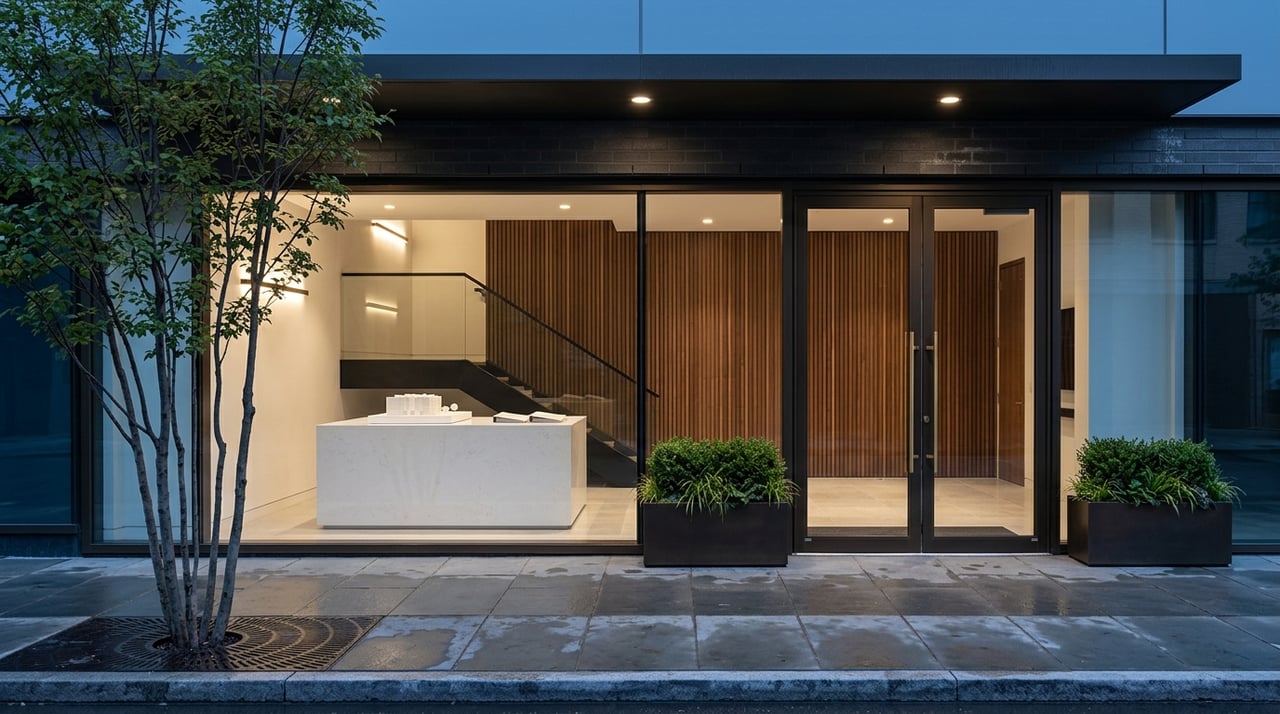
How Boutique Downtown Condo Pre‑Sales Really Work
April 23, 2026
April 23, 2026
If you have ever wondered why some downtown condo projects seem to sell quietly before the wider market even hears about them, you are asking the right question. Boutique condo pre-sales can feel polished on the surface, but behind that early interest is a very specific mix of legal timing, design review, pricing strategy, and buyer communication. If you are considering a future purchase in downtown Asheville, understanding that process can help you read a project more clearly and move with confidence. Let’s dive in.
In simple terms, a pre-sale is a contract to buy a condominium unit before the building is completed. In a boutique downtown project, that often happens when floorplans, pricing, renderings, and finish concepts are ready enough for buyers to evaluate, but before construction is fully finished.
That timing matters in North Carolina because condo law treats an "offering" broadly. Under the North Carolina Condominium Act, advertising, solicitation, or any effort to encourage a buyer to acquire a unit can count as part of the offering process. In other words, pre-sales are not just marketing. They are part of a regulated framework.
Downtown Asheville is not a generic new-construction market. The city describes downtown as a vital center for economic, cultural, and visitor activity in western North Carolina, and ongoing oversight through the Downtown Commission reflects that continued public focus.
For boutique projects, local review can directly affect when a sales campaign should begin. Properties within a local historic district are subject to design review, and the Downtown Asheville Historic District is one of those districts. For major work, the city requires a pre-application meeting, and design approval through a Certificate of Appropriateness does not replace building, zoning, or other permits.
That means the best pre-sales campaigns usually do not start on hope alone. They start when the project has enough design clarity and a realistic understanding of the city review path, including any Certificate of Appropriateness steps that may shape timing, façade decisions, and buyer expectations.
A common assumption is that a developer can start broad public marketing as soon as renderings are available. In practice, the safer answer is more disciplined.
Because public advertising can count as an offering under North Carolina law, the disclosure package needs to be ready before units are offered to the public. Buyers must receive a public offering statement before signing a contract, and that statement has to disclose core project information such as the developer, construction schedule, number of units, governing documents, budget, fees, liens, warranties, and insurance.
For a boutique downtown launch, that usually means the project team first works through site control, design certainty, and review milestones. Then the campaign can move into a more formal sequence that supports both compliance and a better buyer experience.
Most boutique launches follow a fairly consistent pattern. The details vary by project, but the sequence tends to look like this:
This showroom-plus-digital approach fits downtown Asheville especially well. Mills + Coin operates from a downtown showroom at 40 Biltmore Avenue and uses development-specific pages and presentation tools that match how boutique projects are typically introduced and sold.
When you are considering a pre-sale condo, the public offering statement is one of the most important documents in the process. Under the North Carolina Condominium Act, it is not optional background material. It is the core disclosure package for the offering.
At a minimum, you should expect it to address:
If the project may be built in phases, the offering statement must disclose the maximum number of units and related phasing details. That can be especially important in a downtown setting where a smaller initial release may be part of a larger plan.
Deposits are another area where buyers should expect a defined legal process, not improvisation. Under North Carolina law, purchasers have a seven-calendar-day cancellation period after signing a condo contract.
During that rescission window, the deposit must be held in escrow. That rule gives buyers a short but meaningful period to review the documents, confirm their understanding of the project, and decide whether to proceed.
For many buyers, especially those purchasing a future home or second residence downtown, that seven-day period is when questions about finishes, timing, governance, and building operations should be fully addressed. Clear communication during that stage can make the difference between hesitation and confidence.
Design changes are one of the biggest concerns in any pre-sale project, especially in a historic downtown environment where review comments or permit timing can affect exterior details, materials, or sequencing.
North Carolina law addresses this directly. If there is a material change after contract, the developer must amend the public offering statement and provide notice to buyers. That update can also create a new rescission opportunity.
This is one reason experienced project marketing matters. The legal disclosures, renderings, release strategy, and buyer communication all have to stay synchronized as the project evolves.
There is also a specific rule around promotional imagery. If an amenity, rendering, or feature is shown but may not be built, the promotional material must be labeled "NEED NOT BE BUILT." For buyers, that language is not a red flag by itself. It is a sign to ask better questions about what is firmly committed and what remains conceptual.
In a boutique condo building, pricing is rarely just one number applied evenly across the project. It is usually structured as a ladder.
That means value can shift by stack, view, balcony or terrace, parking, floor level, and release timing. A limited early release may help the developer test buyer response and refine later pricing, especially in a market where supply is tight but affordability still matters.
That balance is very real in the Asheville region. The Land of Sky 2025 Housing Needs Assessment reports vacancy rates below 3%, a median home price of $382,769, a median household income of $69,236, and 54,824 cost-burdened households, alongside a regional need for 34,000 new housing units by 2028. For boutique downtown product, that points to demand, but also to the need for disciplined pricing and clear buyer targeting.
If you are exploring a downtown Asheville pre-sale, it helps to think beyond the finish boards and lifestyle imagery. A smart buying strategy starts with understanding where the project sits in its review, disclosure, and release cycle.
Ask practical questions such as:
These are not adversarial questions. They are the questions that help you separate a polished presentation from a well-prepared offering.
Downtown condo pre-sales sit at the intersection of design, law, pricing, and timing. In Asheville, that intersection can be even more nuanced because historic-district review, design committee oversight, and urban project sequencing can all affect what buyers see and when they see it.
That is why a private, detail-driven buying process often works best for boutique projects. Instead of reacting to broad public marketing, you can evaluate a project through floorplans, disclosures, release strategy, and realistic approval milestones.
If you are considering a boutique downtown condo and want a clear, discreet view of how the pre-sale process actually works, Mills + Coin can help you evaluate timing, disclosures, and opportunities with the kind of high-touch guidance that fits a downtown purchase.
Stay up to date on the latest real estate trends.
At Mills Coin & Co. Real Estate Group, we’re your trusted partner in navigating the Asheville real estate market. Whether you're buying, selling, or investing in property in Asheville, we're here to make the process smooth, seamless, and successful for you.

40 BILTMORE AVE ASHEVILLE, NC 28801