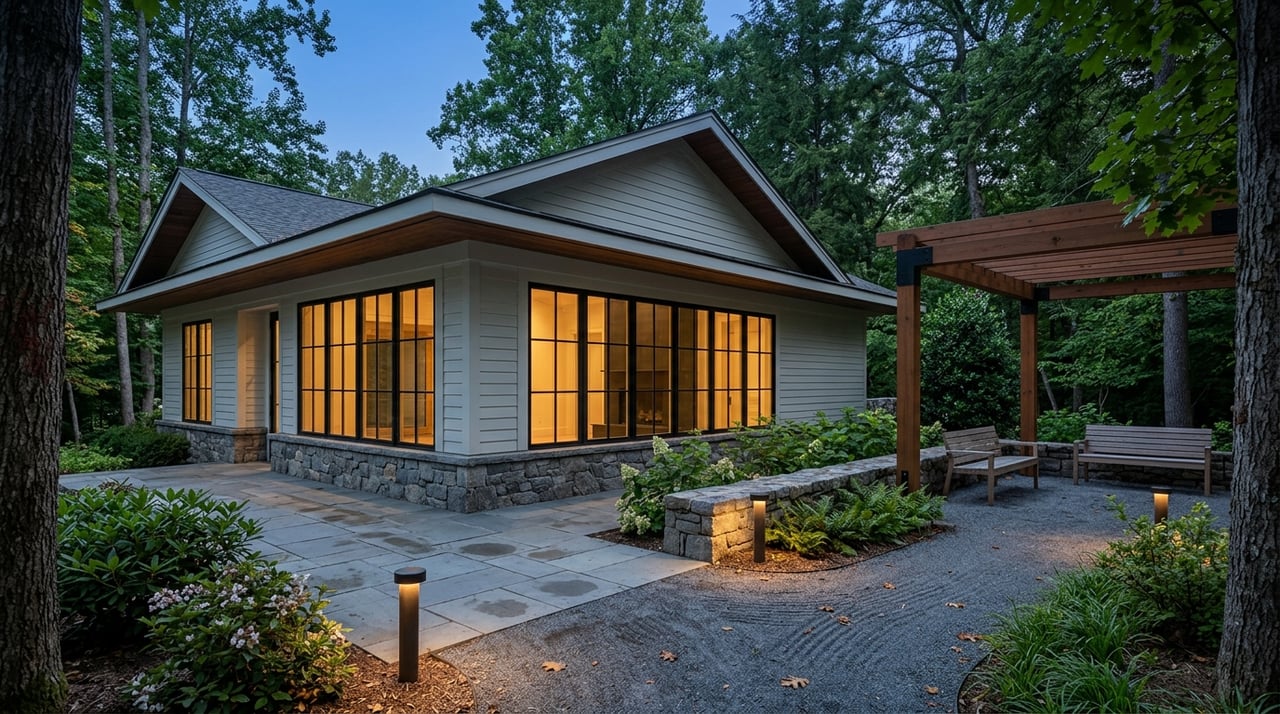
Inside The Ramble Biltmore Forest’s Parks, Trails, And Gathering Spots
June 18, 2026
June 18, 2026
Curious what daily life actually feels like inside The Ramble Biltmore Forest? For many buyers, the answer goes far beyond home design and lot lines. You want to know how the parks connect, where people gather, and whether the trail system becomes part of your everyday routine. This guide walks you through The Ramble’s parks, trails, and social spaces so you can better understand how the community is laid out and how residents appear to use it day to day. Let’s dive in.
The Ramble Biltmore Forest is planned as more than a collection of homes. Community materials describe it as a gated neighborhood within roughly 1,000 acres of conserved or preserved woodland bordering the Blue Ridge Parkway, with homes, greenspaces, and the Living Well Center set within a short walk of one another.
That design matters if you value convenience without losing a sense of privacy. Instead of treating amenities as separate destinations, The Ramble appears to weave them into daily life through wooded trails, open spaces, and a few well-placed gathering spots.
The south gate adds another layer of convenience. According to the community, it connects residents to Biltmore Park Town Square and the broader South Asheville amenity corridor, which helps tie the neighborhood’s internal trail-and-park experience to nearby shopping, dining, and services.
If there is one space that best captures the community’s shared outdoor life, it is Longmeadow Park. The Ramble describes it as the geographic heart of the neighborhood and one of its primary gathering places.
The park includes a natural amphitheater, an open-air pavilion with restrooms, English formal gardens, a children’s playground, a basketball court, a multi-purpose field with soccer goals, and a hand-hewn stone fire pit. That mix gives the park a broad role, with room for both active recreation and relaxed outdoor time.
Community materials also note that Longmeadow Park hosts concerts. That detail helps explain why the space feels central to the overall plan. It is not just a green area to look at. It is designed to support repeat use, from casual afternoons outside to larger neighborhood functions.
One of the most important things to understand about The Ramble is that the trail system is part of how the community works. Published materials are not perfectly consistent on mileage, citing over 5 miles of wooded trails in one place and seven miles in another, but the stronger takeaway is that the network is substantial.
In practical terms, the trails seem to function as everyday circulation. They connect homes with parks, social areas, and natural features, making it easier to walk, run, bike, or simply move through the neighborhood without feeling like you are following a single decorative path.
The community also says residents can hike from the internal trail system onto the Blue Ridge Parkway itself. For buyers who want outdoor access built into daily living, that connection is a meaningful part of the amenity story.
Rather than serving one purpose, the trails appear to support several kinds of use:
That flexibility is part of the appeal. A trail system like this can be useful whether you want a quiet morning walk, a more active outing, or an easy way to move between amenities.
Overlook Park sits along the route toward Biltmore Park Town Square via the southern gate. The Ramble frames it as a place to pause after hiking or biking, which gives it a different feel from a larger, event-focused park.
The space includes benches, a bridge, and a waterfall. Those features suggest a quieter use pattern, where the setting supports short breaks, conversation, or a moment outdoors during a longer walk or ride.
For many buyers, these smaller stopping points can matter as much as the headline amenities. They help create a neighborhood rhythm, where movement through the community feels pleasant rather than purely functional.
Crescent Park centers on a pond and seating area, and it is described as a popular place to sit and spend time outdoors. On the surface, it reads as one more peaceful green space within the neighborhood.
It also serves a practical role. According to the community, the pond functions as a bioretention basin that filters stormwater runoff. That detail reflects a thoughtful planning approach, where landscape features can contribute both visual appeal and infrastructure value.
For you as a buyer, that means the community’s open spaces are not only decorative. In some cases, they are working parts of the broader environmental design.
Some amenities become memorable because of how they shape the visual identity of a neighborhood. In The Ramble, Bow Bridge appears to be one of those places.
The bridge crosses Dingle Creek, which runs through the center of the community and is accessible by trail. The Ramble highlights Bow Bridge as a signature photo spot, and it is easy to see why. Water, stonework, and trail access combine to create a recognizable landmark within the larger woodland setting.
These kinds of features do more than add charm. They give the community distinct reference points, which can make the neighborhood feel more layered and easier to experience on foot.
The Ramble’s social life is not limited to open lawns and the wellness center. Buck Spring Cabin is now used as a community hub for book clubs, card games, resident events, and more, giving the neighborhood an indoor-oriented gathering space with a more intimate scale.
That kind of amenity often supports recurring, low-key interaction. Weekly or informal events can help a community feel active without requiring every gathering to be large or highly programmed.
Tea House Ridge adds another dimension. A recent community story notes that residents gathered there for a tea party inspired by the original Vanderbilt-era tea structure. That example shows how The Ramble’s amenity network can support both everyday social routines and occasion-based events.
The Living Well Center is the neighborhood’s 9,000-square-foot multi-use core. Community materials say residents use it for a heated saline pool, exercise spaces, pickleball, a great room fireplace, and art viewing.
Additional descriptions of the center note a great room, an ample exercise area that opens to the pool deck, a yoga studio, and an exterior yoga lawn. In the broader active-amenity mix, community stories also place tennis, bocce, an outdoor pool with lap lane, seating, and firepit areas.
Taken together, these spaces suggest an amenity plan built for repeat use. Instead of offering one standout feature, the center appears designed to support a range of routines, from fitness and swimming to social time after activity.
| Amenity | Community-described use |
|---|---|
| Heated saline pool | Swimming and regular wellness use |
| Outdoor pool with lap lane | Recreation and lap-style swimming |
| Pickleball | Casual games and social connection |
| Tennis | Active recreation |
| Bocce | Light outdoor recreation |
| Exercise spaces | Ongoing fitness routines |
| Yoga studio and yoga lawn | Indoor and outdoor movement practice |
| Great room and fireplace | Post-activity gathering and relaxation |
The most useful way to think about The Ramble’s amenities is as a connected system. Longmeadow Park, Buck Spring Cabin, the Living Well Center, smaller parks, and the trail network appear to work together rather than compete for attention.
That creates a lifestyle pattern that many buyers are looking for. You can move from wooded privacy to active recreation to quiet outdoor seating to a social event, all within the same neighborhood setting.
It also means the amenity value is not tied to a single feature. The strength of the community seems to come from how daily movement, exercise, and gathering spaces are stitched together across the neighborhood.
When you are evaluating a neighborhood like The Ramble, amenities matter most when they are easy to use consistently. A beautiful park has more value when it sits near trails you will actually walk. A wellness center has more value when it is part of a broader routine that includes outdoor space, courts, and informal places to meet.
That is where The Ramble appears to distinguish itself. The parks and trails are not presented as isolated features. They support a pattern of living that balances nature, movement, and community gathering within one cohesive plan.
If you are comparing premium Asheville-area neighborhoods, this is exactly the kind of detail worth looking at closely. The daily experience often comes down to how a place functions between the headline moments.
If you are considering The Ramble Biltmore Forest or exploring other premium Asheville neighborhoods, Mills + Coin offers a polished, high-touch approach to helping you evaluate lifestyle fit, home options, and long-term value with clarity and confidence.
Stay up to date on the latest real estate trends.
At Mills Coin & Co. Real Estate Group, we’re your trusted partner in navigating the Asheville real estate market. Whether you're buying, selling, or investing in property in Asheville, we're here to make the process smooth, seamless, and successful for you.
40 BILTMORE AVE ASHEVILLE, NC 28801